


A Neyland man who failed to provide a specimen of breath for analysis after police officers found him vomiting at the side of the road from his vehicle has been banned from driving for 14 months after being found guilty at a trial.
Forty-one-year-old Shamus Julius Dewaine, of Frederick Street, appeared at Haverfordwest Magistrates Court on Tuesday for sentencing, after he had been found guilty of the offence in his absence during a trial on December 6.
Mr. Dewaine’s solicitor put forward an application to magistrates to reopen the case, as he had been unable to appear for the trial (where he was due to plead not guilty to the charge) due to a medical matter where he was seen at both Withybush and Glangwili hospitals on the same day of the case, in relation to an eye complaint, it was claimed.
Magistrates opposed the application.



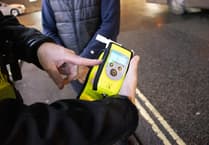
Explaining Mr. Dewaine’s arrest on October 14 in Haverfordwest, prosecutor Sian Vaughan told the court that police spotted the defendant in his vehicle at 1.15 am parked by the roadside.
“Police officers spoke to the driver and could clearly see he was intoxicated. He claimed that he had been suffering with tonsilitis and had stopped and pulled over his car as he was feeling sick.
“Mr. Dewaine was unsteady on his feet, and was asked to provide a roadside test, but he refused twice, and again at the police station,” she continued.
The defendant told police officers that he was suffering from CRPS (Complex Regional Pain Syndrome) telling officers, ‘I don’t understand what you’re saying, and don’t understand why you arrested me’.
The court heard how Mr. Dewaine had been charged for a similar offence in 2003 for failing to provide a specimen.
His solicitor told the court that he had a ‘chequered medical history’ and that he had undergone a lot of surgery a number of years ago after suffering with cancer, which had left him with the CRPS condition and nerve damage.
Mr. Dewaine’s solicitor told magistrates that he disputed that he was under the influence of alcohol at any time during the time of his arrest, and that his medication was the cause of the problem, which is why he had pulled over to be sick.
When sentencing, magistrates said that it was clear that there was evidence that the defendant had a drink problem, referring to medical notes where it stated that last month Mr. Dewaine had stopped consumption of alcohol after a daily intake of eight to 14 pints.
They handed him a 14-month driving ban and fined him £180 for the offence.
Mr. Dewaine was also ordered to pay prosecution costs of £650 and a £30 victim surcharge.