
April 14 was the first ever National Laverbread Day. Business across the UK put laverbread on the menu and the public were urged to get involved by cooking up their own laverbread dishes and sharing their pictures online and via the National Laverbread Day website.
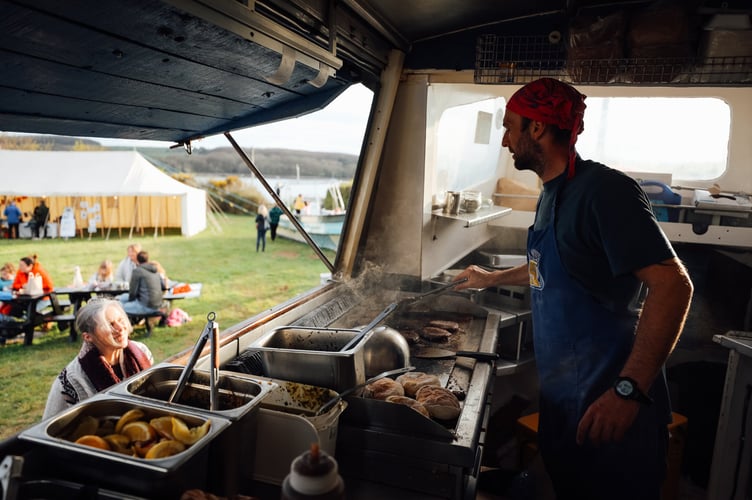
Jonathan Williams, founder of National Laverbread Day, Pembrokeshire Beach Food Company and the Cafe Mor street food outlet, celebrated the inaugural event on April 14 at his new pub (and Cafe Mor’s new location), Old Point House at Angle.
The day saw people enjoying laverbread dishes from Cafe Mor, free laverbread samples and music from Whitland Male Voice choir.
Jonathan Williams said it was “a fantastic day of celebrating all things laverbread.



“This is just the start and we have already started planning the next National Laverbread Day.”
Laverbread is the cooked version of ‘laver’ – porphyra seaweed – a diaphanous red algae found abundantly along Wales’ rocky coastline. It is cooked up for hours to make the Welsh delicacy, laverbread (a glutinous, dark green gloop that tastes delicious). A traditional ingredient in a Welsh breakfast (often served with egg, bacon and cockles), it also works beautifully in a range of dishes, from breads to sauces.
Jonathan celebrated National Laverbread Day at The Old Point House, a former pirates’ haunt reached across a tidal causeway on Angle, with laverbread dishes, free laverbread, and more. And he is working to get the whole of the UK cooking with this free, sustainable and nutritious ingredient.
“National Laverbread Day is a long overdue addition to the calendar that aims to get more people enjoying this delicious delicacy,” he said.
“It’s a nutritious versatile ingredient that’s in plentiful supply around our coastline and it deserves to be more widely used.”
Jonathan’s laverbread facts:
• Although laver (porphyra seaweed) is found around Britain’s coastline, the production of laverbread is a primarily a Welsh tradition.
• Laver is harvested from rocks in the wilds of West Wales, which has the second largest tidal range in the world and takes the full force of the Atlantic storms.
• Not many other foods take as long as laverbread to cook (typically about eight hours).
• No other food looks so unappealing after several hours of cooking.
• It is a powerhouse of nutrients, vitamins and minerals.
• It has been dubbed “future food” as it requires no land, freshwater, pesticides or fertilizers and can grow up to 5mm a day.
• Its versatility is only now being discovered in modern day cooking.
• It tastes sublime, or, as the Japanese say has “essence of deliciousness” – a satisfying, savoury umami flavour.
• It is the untamed mysterious lady of the seaweed world, constantly changing its mind as to where and when it grows.
Comments
This article has no comments yet. Be the first to leave a comment.