

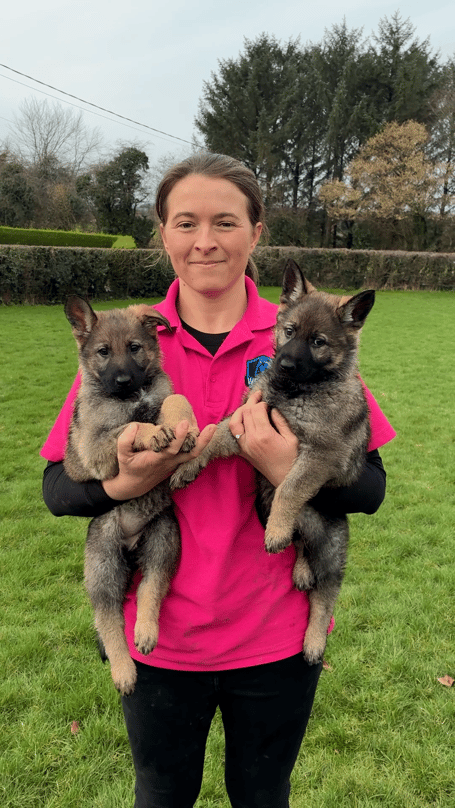
THERE are 15.5 million dogs in the UK. Since the start of the pandemic, a total of 3.2 million households acquired a new pet, and Wales is home to almost a quarter of a million dogs.
These days, ‘Must Love Dogs’ isn’t just a film title, it’s a social requirement, with cafés and attractions increasingly advertising their dog-friendly credentials.
People bring their ‘fur babies’ to meetings, classes, to work and other people’s homes, into coffee shops to sit on their laps a sniff-and-a-lick away from the table, into shops where staff make a fuss of them. People bring take them on buses and trains, sometimes big dogs that straddle the aisle, and any inconvenience to passengers or staff just comes as part of the deal.
You’ll find dogs loose in car parks, tied up straining at the leash at shop entrances, behind garden fences, barking and jumping wildly at passers-by; running free in town parks, in children’s play areas, on sports fields, cemeteries, nature reserves, across farmland, on coast paths and many other places where dogs are either required to be under close control or banned altogether.




Spare a thought for those who are nervous of dogs - for whom every bark is a threat and the thought of being sniffed, licked, jumped at or bitten is horrific. Those who are embarrassingly terrified when a large, loose dog with a glint in its eye takes it into its mind to start bounding straight towards them with possible murderous intent - or perhaps it’s just ‘saying hello’?
It’s not as irrational as it sounds. Dog bite incidents and hospital admissions have almost tripled across the UK in recent decades, and noticing the entitled and uncaring attitude of certain dog owners is part of what has prompted a call to bring back dog licences - in a new form that involves some sort of training and accountability so that owners know how to behave responsibly.
What may seem surprising is that many dog owners are in favour, too. What follows may help to explain why.
On May 28, at St James’s Palace (by kind permission of Patron, His Majesty The King) Dogs Trust unveiled a new strategy. It’s needed because of a “growing crisis in dog welfare in the UK”.
In 2024 alone, over 47,000 people contacted Dogs Trust during the year about giving up their dog, according to the charity’s most recently published annual report.
The most common causes include “no longer able to cope with owning a dog”, “unwanted behaviours”, a “change of job/working pattern”, “a change in accommodation” or “financial reasons”.
So far this year, the charity has re-homed around 3,450 dogs, roughly in line with last year. But more dogs are arriving with behavioural issues, needing longer and more specialist support.
Dogs Trust and RSPCA have come together to create a Responsible Dog Ownership framework which has been designed to help define what it means to be a responsible owner.
New research by YouGov on behalf of the two charities reveals that in Wales, 91 per cent of dog owners say they are responsible, meanwhile 89 per cent of people report encountering irresponsible dog ownership. Common issues include dog mess, owners letting their dogs jump up at people without permission, dogs off-lead in restricted areas, and owners ignoring their dogs when they were acting aggressively.
This new data is further supported by Dogs Trust’s National Dog Survey, which reveals insights into more than 340,000 dogs. Four in ten owners surveyed said they worry about the behaviour of other people’s dogs and what this means for keeping their own dog safe.
The Pembroke and Pembroke Dock Citizen’s Forum on Facebook is full of evidence that local dogs often get attacked by loose dogs with little or no recall and when they are being warned off their owners just say “Oh, my dog’s okay.” The overriding message to these cavalier owners is “keep your dog on a lead.”
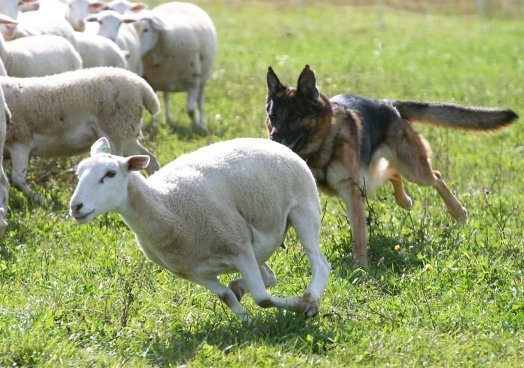
Dogs can scare, harass, or even kill local wildlife, yet instructions to keep them on leads in nature reserves such as Westfield Pill in Neyland are often disregarded. Attacks on livestock have also been highly problematic. The latest year’s figures from NFU Cymru, estimate the cost of farm animals injured or killed by dogs in Wales to be £385,000.
Each year, the National Sheep Association (NSA) runs a campaign to raise awareness of the issue of sheep worrying by dogs. In 2026, the campaign ran from March 30 to April 6.
It is every dog’s instinct to chase, even if they are usually obedient and good with other animals. Being chased by a dog can do serious damage to sheep, even if the dog doesn’t catch them. The stress can cause sheep to die and pregnant ewes to miscarry their lambs. Sheep fleeing from dogs are often killed or seriously injured by their panicked attempts to escape, causing untold damage to field boundaries in the process.
An NFU Mutual survey revealed that 57 per cent of dog owners let their pets off-lead while in the countryside. Meanwhile, 44 per cent of owners admitted their dogs only returned “some” or “most” of the time, and 10 per cent admitted their dog has no recall at all.
The NSA encourages anyone with a sheep worrying incident to report it to the police and request a crime reference number. Then help their research by completing a form to log the incident: https://nationalsheep.org.uk/sheep-worrying-case-log/
An NSA survey found that 87 per cent of sheep farmers experienced a dog attack on their flock in 2024, with many reporting multiple incidents.
The Dogs (Protection of Livestock) (Amendment) Act 2025, which came into effect on March 18, 2026, removes the £1,000 cap from the penalties. Offenders may also be required to pay compensation to farmers, including costs for veterinary care and livestock losses.
The law clarifies that chasing or being loose among sheep constitutes an offence. The Act also expands the definition of livestock to include camelids such as llamas and alpacas.
Incidents taking place while farmers are moving their livestock on roads and public paths are now explicitly covered. The updated law equips police with stronger investigative powers, including entering premises to secure evidence or animal DNA.
Dog mess can also cause serious diseases in sheep through the contamination of grass and water, so it is just as vital that owners clear up after their dogs in the countryside as it is in the town.
Leaving faeces alters soil chemistry, introducing excess nitrogen and phosphorus, which can pollute and alter waterways and severely harm local biodiversity.
Discarded dog poo can also attract rats as it contains undigested proteins, fats and carbohydrates and presents a potent food source for rodents.
While the majority of owners responsibly bag and bin their dogs’ waste, local evidence on pavements, footpaths, beaches, verges and open spaces shows that there are still plenty who don’t.
In Pembroke Dock, despite its array of regularly emptied dog bins, the Town Council has had to remind owners of their responsibility to clean up after their dogs after witnessing an increase of fouling around the town - even in the Military Cemetery, and the tennis courts, where they’re not allowed.
Saundersfoot Sports and Social Club has also had to remind dog walkers to keep off the sports pitch.
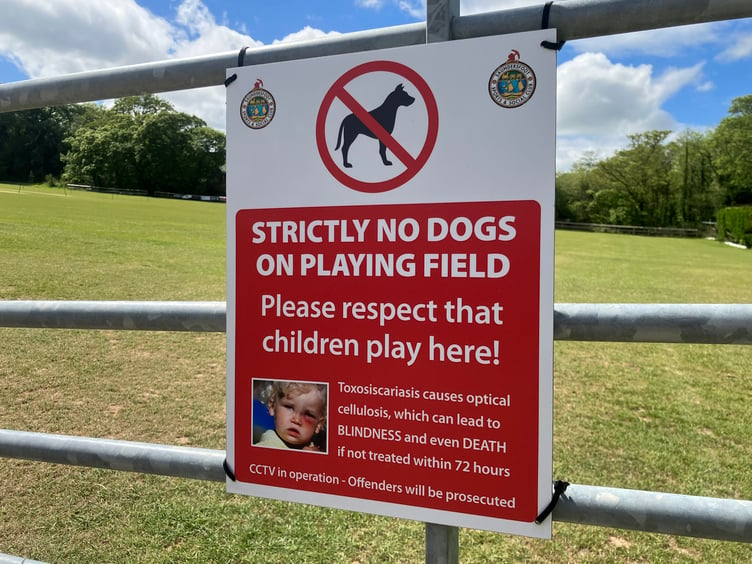
“Some people are blatantly walking their dogs past the numerous signs and letting their dogs foul on the field.
“The rule is incredibly simple: No dogs on the pitch - at all.”
“Dog mess isn't just gross; it is a massive health hazard. We have kids rolling around, playing sports, and having fun on that grass every single week.”
The signs explain that toxosiscariasis (microscopic parasite eggs often present in dog poo) causes optical cellulosis, which can lead to blindness and even death if not treated within 72 hours.
Failing to clean up after your dog is an offence. In Pembrokeshire, a dog walker seen not cleaning up after their pet can be issued a £150 Fixed Penalty Notice (reduced to £75 if paid within 10 days). If you see regular problem areas, report them to the council by emailing [email protected] with as much detail as possible.
For Cornwall-based family company Dicky Bag, responsible dog ownership includes: Picking up dog mess every time; carrying waste securely until proper disposal, avoiding leaving waste in public or natural spaces, and worming your dog. Worming at least every three months not only benefits your pet, but also other dogs, people (particularly children), wildlife and livestock.
A 2025 YouGov poll revealed 85 per cent of Britons think there should be some form of dog licence, with 54 per cent believing it should be a requirement for owning any breed.
The ‘Don’t Ban Me Licence Me’ campaign would like to see a ‘Dog Highway Code’ established, ensuring owners understand their legal obligations when owning a dog, and a centralised database to record and monitor dog-related incidents.
In March, the Green Party argued that efficient, modern licensing that distinguishes between professional breeders and pet owners is essential to address “wholesale breeding and manipulation” within the companion animal industry.
The RSPCA, in collaboration with Dogs Trust, has funded the York Health Economics Consortium to look at costs associated with dog control across the UK and explore the potential reintroduction of licences.
In May, Dr Samantha Gaines, RSPCA head of companion animals, told the BBC Radio Cornwall cases of dog bites had been of particular concern to the charity for a "very long time".
She said there had been some "horrific injuries" caused by dog bites in recent years, as well as "some really tragic fatalities".
"Dog licensing has the potential to actually help us solve some of the challenges around dog ownership,” she said, adding that research had been commissioned to understand the public's “support and appetite” for a licence scheme.
“We don’t just want a rehash of what we had in the ’80s. That was seen to be a tax on responsible dog owners, we don’t want that to be the case this time round, but it’s got to be effective.”
Meanwhile, here are some reminders of the law:
The Highway Code explicitly states that dogs must not be let out on a road on their own. In cars they must be suitably restrained (e.g. using a seat-belt harness, pet carrier or dog cage) for everyone’s safety.
When walking alongside a road on a pavement, path, or bridleway shared with pedestrians, cyclists, or horse riders, your dog should be kept on a short lead.
The ‘close control’ requirement on public footpaths allows dogs to be off-lead only if they can be trusted to stay on the path and return immediately upon command.
On designated open country or common land, it is a legal requirement to keep your dog on a short lead between March 1 and July 31, and at all times near farm animals.
If your dog chases, attacks, or causes distress to livestock, it is a criminal offence and courts can impose unlimited fines.
It is illegal to let a dog be “dangerously out of control” anywhere. A dog is considered out of control if it injures someone or simply makes a person fear they might be injured.
Perhaps the following advice, taken from local organisations such as Pembrokeshire Coast National Park, could be added to a ‘Dog Highway Code’:
• Don’t allow your dog near cliff edges, rough seas or strong tidal currents.
• Follow signs and abide by byelaws such as dog restrictions on beaches.
• Don’t allow your dog to bark excessively.
• Remember that not everyone likes dogs, especially small children.
• Think of the weather – on hot days cars and beaches can be too hot for dogs.
• Show respect for other people and their dogs.
For more advice on caring for dogs and the community they live in, check out the Responsible Dog Ownership framework at www.dogstrust.org.uk/about-us/research-expertise/responsible-ownership .
Comments
This article has no comments yet. Be the first to leave a comment.