

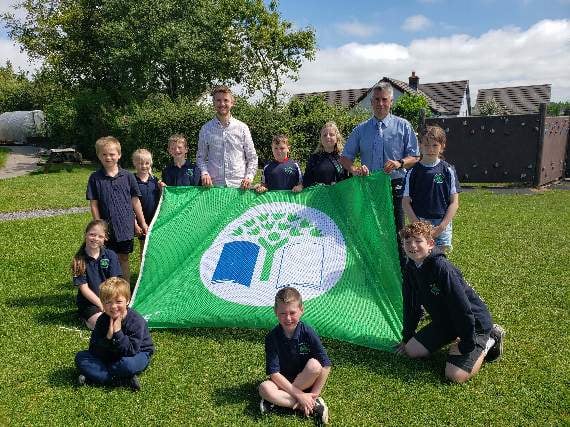
Pembrokeshire has come out top county in Wales for Green Flag accredited Eco-Schools, according to research by essentials service provider Direct365.
To celebrate the launch of their new SoluCLEAN eco cleaning range, Direct365 has carried out research to reveal Wales’ most eco-friendly schools, looking at the number of Eco-School Green Flag accredited and registered schools per county.
The Eco-Schools Green Flag is a prestigious annual accreditation, which rewards a school for their ecological achievements and providing young people with confidence and motivation to continue to actively engage with environmental issues throughout their lifetime.
The data, which looked at the number of Eco-School Green Flag accredited and registered schools reveals that Pembrokeshire takes the position as eco-leaders with 35.5 per cent of their schools currently holding an Eco-Schools Green Flag accreditation, with Blaenau Gwent sitting closely behind with 33.3 per cent of their schools accredited.Caerphilly took the third place spot with an accreditation rate of 31.8 per cent.




With 18.4 per cent of Welsh schools currently flying a Green Flag in front of their school, here is a list of the top 10 counties where you will find the most Green Flag accredited schools:
- Pembrokeshire: 35.5 per cent
- Blaenau Gwent: 33.3 per cent
- Caerphilly: 31.8 per cent
- Merthyr Tydfil: 29.6 per cent
- Vale of Glamorgan: 29.5 per cent
- Ceredigion: 28.3 per cent
- Newport: 23.6 per cent
- Carmarthenshire: 21.1 per cent
- Neath Port Talbot: 19.7 per cent
- Rhondda Cynon Taf: 19.4 per cent
On the whole, data reveals that schools across Wales are becoming increasingly ecologically aware and conscious, as 84.5 per cent of all schools are registered on the Eco-Schools programme. Therefore, the majority of Wales’ schools are all on their journey to become a Green Flag accredited school.
So, what simple eco actions can you make in your school to do your bit to become more environmentally friendly?
- Get pupils involved in recycling: It is crucial to demonstrate how easy recycling is by asking pupils to do it themselves. Why not get in touch with your local recycling plant and ask them to conduct a tour for the school. Raising awareness of what happens to your waste can offer vital context for both students and staff when they are next faced with the choice of recycling their waste or throwing it in landfill.
- Grow a garden: A school garden is a much-needed green space, especially for schools located in urban areas. Having a school garden nurtured and taken care of can lead to an increased appreciation for the environment. School gardens also provide opportunities to teach students about natural food-growing methods including mulching, composting, soil cycles, plant diversity, and supporting beneficial insect habitats.
- Switch to eco cleaning products: Switching to eco ranges of cleaning products means schools will use non-toxic cleaning products in biodegradable packaging which perform just as well as the chemicals we are used to. By using environmentally friendly cleaning products, you contribute to the reduction of water and air pollution, climate change and disposable plastic use.
Karl Bantleman at Direct365 commented:
“It’s great to see schools get on board with such amazing initiatives such as the Keep Wales Tidy Eco-Schools programme, encouraging children from such a young age to make eco-conscious decisions in their everyday lives.
“We recognise the increased need and demand for eco-friendly products throughout the workplace, so here at Direct365 and are excited to have launched our new range of eco cleaning products, designed to reduce single use plastic waste and encourage a movement towards a more sustainable method of cleaning in businesses, including those in the education sector.”
You can find out more about Direct365’s new eco-friendly cleaning range here.
Comments
This article has no comments yet. Be the first to leave a comment.