

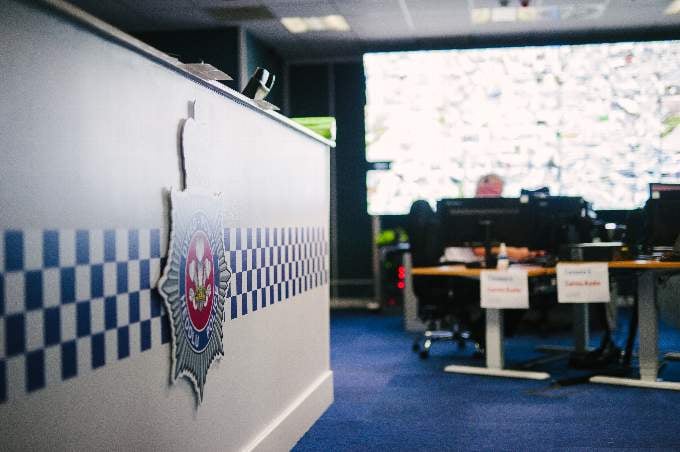
Last month Dyfed-Powys Police issued a press release about a number of reports of ‘Courier Fraud’ in Pembrokeshire, where people were receiving calls from someone purporting to be a police officer from the London area.
Up until that press release on November 3 the force was receiving three to four reports a day. But following the press release the number of reports increased to an average of 10 a day and has stayed at that level since.
In total Dyfed-Powys Police has received 181 reports since October 30 this year. Sadly ten of the 181 are full offences with more than £85,000 being lost, but thankfully more than £66,000 has been disrupted and subsequently saved.
“This is obviously of great concern, and we want to do as much as possible to try and protect the vulnerable people that these scammers are targeting,” said a police spokesperson.




Sandra Lawson, a grandmother from Pembrokeshire, was targeted by these scammers, but thankfully did not lose any money. Nevertheless, this was traumatising for her.
She received a call from a man purporting to be a police officer who informed her that her card had been used fraudulently.
The man gave his full name and collar number and stated that an arrest had been made which had led him to contact Mrs. Lawson.
He even invited Mrs. Lawson to immediately phone 999 to verify his identity.
The man then queried which bank Mrs. Lawson uses before inviting a colleague on to the line. This colleague stated that they would run some checks on the account with Mrs. Lawson’s bank, before claiming that the account hadn’t been touched.
This is when Mrs. Lawson put the phone down and immediately phoned 999, waiting for the dial tone first, to make sure that the line had cleared.
Mrs. Lawson recalled: “I was a mess all day after it happened, my stomach was churning and I was shaking like a leaf thinking about what could have happened.
“I didn’t ever question that he wasn’t a police officer, I was brought up to respect the police and even if I wanted to, I didn’t feel like I could hang up on them because I was speaking to the police.
“You give them an automatic trust and believe that they are there to help you. It wasn’t until his colleague said she had spoken to the bank that I suspected anything.
“My grandson has always taught me that I shouldn’t give my personal details to anyone, and that the bank won’t give anyone else any details of my account.
“If they hadn’t mentioned speaking to the bank, I would have honestly believed that I was speaking to an officer because he was so convincing.
“When I hung up on them to dial 999, I heard the dial-tone, so I knew that they weren’t still waiting on the phone. I think they gave up on me because I knew something wasn’t right.
“I think having my grandson always telling me that the bank wouldn’t share any of my account details really helped me to know something wasn’t right.
“It’s important that people have this information and I know it’s in leaflets, but I wouldn’t have read those leaflets if it hadn’t happened to me so having the information from my grandson really helped.
“I’d advise anyone in that situation to be very wary of someone claiming to be the police. The best thing that I can say is that you should hang up, wait for the dial tone, then call 101 so that you know that you’re speaking to the genuine police.
“Once I spoke to the actual police, they were so supportive and gave me a lot of reassurance. My opinion of the police definitely hasn’t changed after this, they couldn’t have been nicer to me.
“It just breaks my heart to think that these scammers are so clever that they can convince you that you’re speaking to the police, before they take your life savings,” she added.
Investigations are continuing into a number of these reports, but we are asking friends and family to look out for those that could be vulnerable – talk to them about this scam, advise them to be vigilant, and report any suspicious calls.
Do:
• Make a note of the callers details, including name, rank, collar number and station.
• Note any contact details from caller display, or via 1471 after the call has ended.
• Block the number that called you.
• End the call. Say you will contact the police directly to confirm the caller’s identity and be put through internally.
• Ring a family member or friend before you make your next phone call. This is to make sure the line has disconnected from the initial (suspected fraud) caller.
• If anyone calls at your address following this type of suspected fraud call, call 999.
Don’t:
• Hand out any personal or financial details
• Engage in conversation. Hang up.
• Make any arrangements to hand over any cash or card
Anyone who receives a similar call is asked to contact Dyfed-Powys Police either online: bit.ly/DPPContactOnline; by emailing: [email protected] or calling: 101.
Anyone who thinks they have fallen victim to a scammer should report it by calling 101, or Action Fraud on 0300 123 2040.
For further advice and information on how to avoid being scammed visit www.actionfraud.police.uk
Comments
This article has no comments yet. Be the first to leave a comment.