

PASSENGERS will get their first look at the future of Britain’s railways today (December 9, 2025), as branding for Great British Railways is unveiled and landmark legislation to reform the railway is debated in Parliament.
Up and down the country, the consensus is clear: the railway needs to improve. That is why the Government is bringing train operators back into public ownership to reform a fragmented system. Seven major train operators are already in public hands, covering a third of all passenger journeys in Great Britain.
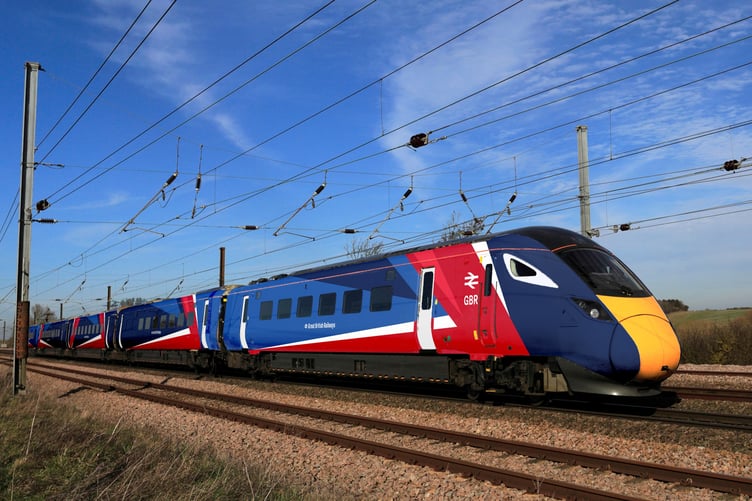
The logo and train livery for Great British Railways will be rolled out from next spring to trains, websites, stations, and more – bringing the railway together under one brand owned by the public, delivering for the public, not for private shareholders.
The design features a red, white and blue colour scheme and sharp angles to create a striking and memorable design mirroring the Union Flag. The GBR logo has also been revealed, featuring the iconic double arrow symbol in a nod to Britain’s proud railway heritage.



It comes as the landmark Railways Bill is debated in the House of Commons today, and follows the Government's decision to freeze rail fares for the first time in 30 years to put money back in passengers' pockets and ease the cost of living for hard-working people.
The Bill will create Great British Railways, which will bring together 17 different organisations, cut through the frustrating bureaucracy and lack of accountability that continues to plague the railways, and instead run Britain’s railways as a single organisation for the first time in decades.
Across publicly owned operators, significant progress is already being made: South Western Railway has quadrupled the number of its new Arterio trains, increasing passenger capacity by nearly 10%. A new East Coast Mainline timetable is being introduced this month to add 10,000 extra LNER services annually, meaning 60,000 more seats a week, and Southeastern Railway has invested £2 million in video and camera technology to help identify potential faults on the rail network so they can be fixed quickly.
GBR will maintain and improve the railways, accountable to passengers, freight customers and taxpayers. Fares and ticketing will be brought into the 21st century (including with the new app), a strengthened Passenger Watchdog will investigate poor service and demand improvement, and GBR will be empowered to build a railway that supports the Government’s missions to drive economic growth and opportunity by unlocking jobs and housing.
The design will also feature on the GBR ticketing app, which will be a one-stop shop for passengers to check train times and buy tickets at the best prices across the rail network without any booking fees. Disabled passengers will also be able to use the app to book Passenger Assist when buying tickets, creating a seamless experience.
Transport Secretary Heidi Alexander said:
“The future of Britain’s railways begins today. I’m immensely proud to unveil the new look for Great British Railways as we deliver landmark legislation to nationalise our trains and reform the railway so it better serves passengers.
“This isn’t just a paint job – it represents a new railway, casting off the frustrations of the past and focused entirely on delivering a proper public service for passengers.
“With fares frozen, a bold new look and fundamental reforms becoming law, we are building a railway Britain can rely on and be proud of.”
The brand will be on display at London Bridge station today, where there will be a special one-day exhibit including a GBR branded Hornby model train, plus a demo of a GBR branded train in the Train Sim World 6 game. Passengers at London Bridge, and Birmingham New Street, Glasgow Central, Leeds City, and Manchester Piccadilly will be able to see the new design on digital displays and posters across these stations this week.
It will then begin to appear across a number of publicly owned train operators from next spring, to demonstrate the Government's commitment to change, and start the journey of simplifying the railway for passengers. Most of the rollout will be gradual, and the brand was designed in-house, to maximise value for money.
Mayor of the East Midlands, Claire Ward, said:
“This is a huge boost for passengers not only in the East Midlands but across the country. For too long, our trains have been overcrowded, unreliable, and confusing to navigate. Great British Railways will make journeys simpler, faster, and fairer for everyone.
"Passengers here will be able to plan and pay for trips more easily with the app, while investment in new trains and improved services, backed by the decision to base Great British Railways’ headquarters in Derby, will mean more seats, more comfort, and more reliable connections between our towns and cities.
"This is about giving people a railway that actually works for them, one that helps people get to work, study, or visit friends and family with confidence and ease.”
Alex Robertson, Chief Executive of the independent watchdog, Transport Focus:
"Today's second reading of the Railways Bill, alongside a preview of the logo and ticketing app, marks another step on the journey towards a railway built around passengers. As well as what is written into law, the success of Great British Railways will depend on its people and culture, and today gives us a glimpse into what that could look and feel like."
Jacqueline Starr, Executive Chair and CEO of Rail Delivery Group, said:
“The Railways Bill presents an opportunity to bring the industry together with a single focus on delivering for our customers and we are determined to play our part in getting it right. As the industry evolves, our priority remains supporting the rail network to keep people moving and making sure we are delivering a better railway for everyone across the country, now and in the future.
“We welcome the Government’s commitment to improving the services our customers depend on every day, and we will continue to work closely with industry partners to support a smooth transition to Great British Railways.”
Comments
This article has no comments yet. Be the first to leave a comment.